
Inspiring Science, Fueling Progress, Revolutionizing Care: Insights from the AACR Cancer Progress Report 2024
- Oct 26, 2025
- 4 min read
Abstract

The American Association for Cancer Research (AACR) 2024 Cancer Progress Report details the year's greatest accomplishments in preventing, detecting, treating, and surviving cancer. Covering the period July 2023 to June 2024, the report highlights a 33% decline in total cancer death rates in the United States since 1991, decisive advances in molecularly targeted therapies and immunotherapies, and advancements in survivorship care. While much has been accomplished, challenges exist, including disparities in outcomes for racial and ethnic minorities, rising incidence in certain cancer types, and the rare susceptibilities of pediatric and adolescent/young adult (AYA) populations. The article condenses findings in terms of translational research, clinical innovation, and policy priorities that shape the future of cancer care.
Introdcution
Cancer continues to be a leading global cause of morbidity and mortality. In the United States alone, cancer incidence continues to impact millions of people each year, and children and AYAs experience distinct disease burdens. The AACR's 14th annual Cancer Progress Report highlights the dual stories of progress and ongoing challenge, highlighting the indispensable role of research funded by the federal government and evidence-based policy in the war against cancer.
Decline in Mortality and Shifting Trends of Cancer
Cancer death rates in the U.S. declined by 33% during 1991 and 2021, averting more than 4.1 million American deaths.
Major reductions were seen in colorectal, breast, leukemia, lung, melanoma, and kidney cancer through screening and precision medicine.
Increased incidence was observed in pancreatic cancer, uterine cancer, and HPV-associated oral cancers, reflecting the need for new therapeutic and preventive measures.
Pediatric and AYA
14,910 children and adolescents and 84,100 AYAs were projected to be diagnosed in 2024.
Pediatric cancers continue to remain as the major cause of disease-related mortality in children, with leukemia and brain tumors being the most common.
In AYAs, leading incidence patterns are seen in thyroid cancer, melanoma and breast cancer.
Pathogenesis and Risk Factors
Somatic mutations account for ~90% of cancers, and inherited mutations contribute to ~10%.
Pediatric cancers are disproportionately caused by germline mutations and chromosomal alterations, reflecting the need for high-risk individuals to have genetic testing.
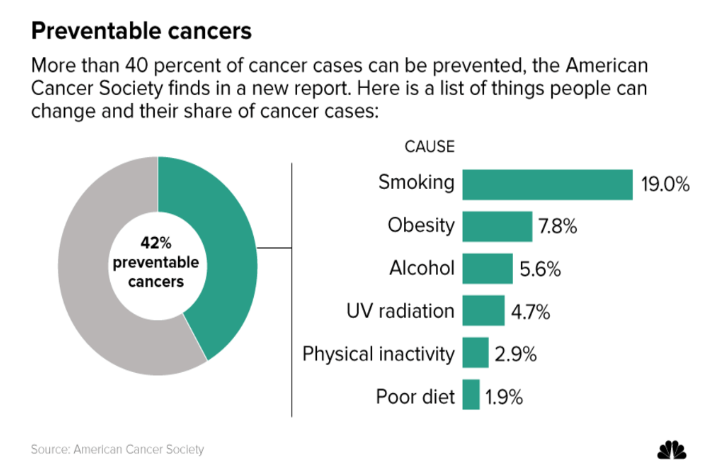
More than 40% of U.S. cancer cases are preventable, related to smoking, obesity, poor diet, alcohol consumption, infection, and environmental exposures such as pollution and endocrine disruptors.
Screening and Early Detection
USPSTF(U.S. Preventive Services Task Force)-recommended screening guidelines for colorectal, breast, cervical, prostate, and lung cancer have already saved around $6.5-8.6 trillion since 1996.
For pediatric populations, genetic testing and surveillance are prioritized over traditional screening.
Therapeutic Advances (July 2023–June 2024)

The FDA has cleared 15 anticancer therapeutics and one breast cancer surgery imaging agent.
Landmark approvals include:
The first cell immunotherapy employing tumor-infiltrating lymphocytes.
A bispecific antibody targeting T cells for small cell lung cancer.
The first breast cancer AKT inhibitor.
The first KRAS-targeted therapy for colorectal cancer.
Advances in pediatrics include new targeted therapies for brain tumors and the prevention of relapse in high-risk neuroblastoma.
Survival and Quality of Life
As of January 2022, 18 million cancer survivors are residing in the U.S.
They experience physical, psychosocial, and economic burdens and need a multidisciplinary care system of patient navigators and clinical coordinators.
Lifestyle interventions like physical exercise, diet, and a decrease in tobacco/alcohol consumption improve quality of life.
Next Steps in Cancer Science
Radiotheranostics for simultaneous detection and treatment.
Noninvasive imaging of real-time tumor metabolism.
Cancer engineering merges engineering and biology to better understand tumor dynamics and develop novel interventions.
Policy and Research Investment
AACR calls for expanded Federal investment, including:
$51.3B for NIH in FY2024.
$3.6B for Cancer Moonshot initiatives through 2026.
$472.4M for CDC Cancer Prevention programs in FY2025.
$55M for the FDA Center of Excellence in Oncology.
Discussion
The AACR Cancer Progress Report 2024 reveals the extraordinary track record of innovation and the profound inequities defining the field of oncology today. Immunotherapy and molecular targeting continue to revolutionize the therapeutic paradigms for previously intractable cancers. However, the highly disparate distribution of outcomes, especially in underserved populations, shows the necessity for policy intervention and research funding support in a balanced manner.
In pediatric and AYA oncology, breakthroughs in genetic testing and targeted therapies are promising but also reveal the limitations of preventive strategies in these age groups. Survivorship care remains an emerging frontier for the millions of survivors struggling with complex long-term challenges.
The confluence of technological advancements (cancer engineering, radiotheranostics, imaging) and policy-driven support can spur the next set of innovations. Continual investment at the federal level is non-negotiable in scientific innovation, yielding tangible health outcomes across all demographics
ConclusionThe AACR Cancer Progress Report 2024 documents a year of extraordinary scientific advances, seminal advancements in therapy, detection, and survivorship. However, much remains to be done in equity, the rising incidence of various cancers, and survivorship care. The future of oncology lies in the confluence of scientific innovation, precision prevention, and evidence-based policymaking. Continuing investment in research and equitable access to care will be at the epicenter of making the vision of revolutionizing cancer treatment and survivorship for any patient a reality.
References
Fox, M. (2017, November 21). Fresh look at cancer shows smoking, obesity top causes. NBC News; NBC News. https://www.nbcnews.com/health/cancer/fresh-look-cancer-shows-smoking-obesity-top-causes-n822836
Meeting News Archive. (2019). American Association for Cancer Research (AACR). https://www.aacr.org/about-the-aacr/newsroom/aacr-meeting-news/
Meeting rising demands of a new radiotheranostic era. (2023, September 25). European Pharmaceutical Review. https://www.europeanpharmaceuticalreview.com/article/186284/meeting-rising-demands-of-a-new-radiotheranostic-era/
Wang, L. (2022, October 31). KRAS-Targeted Therapy Doubles as Component of Immunotherapy - NCI. Www.cancer.gov. https://www.cancer.gov/news-events/cancer-currents-blog/2022/kras-targeted-drugs-as-immunotherapy
Williams, P. A., Zaidi, S. K., & Sengupta, R. (2024). AACR Cancer Progress Report 2024: Inspiring Science—Fueling Progress—Revolutionizing Care. Clinical Cancer Research, OF1–OF3. https://doi.org/10.1158/1078-0432.ccr-24-2820


Comments